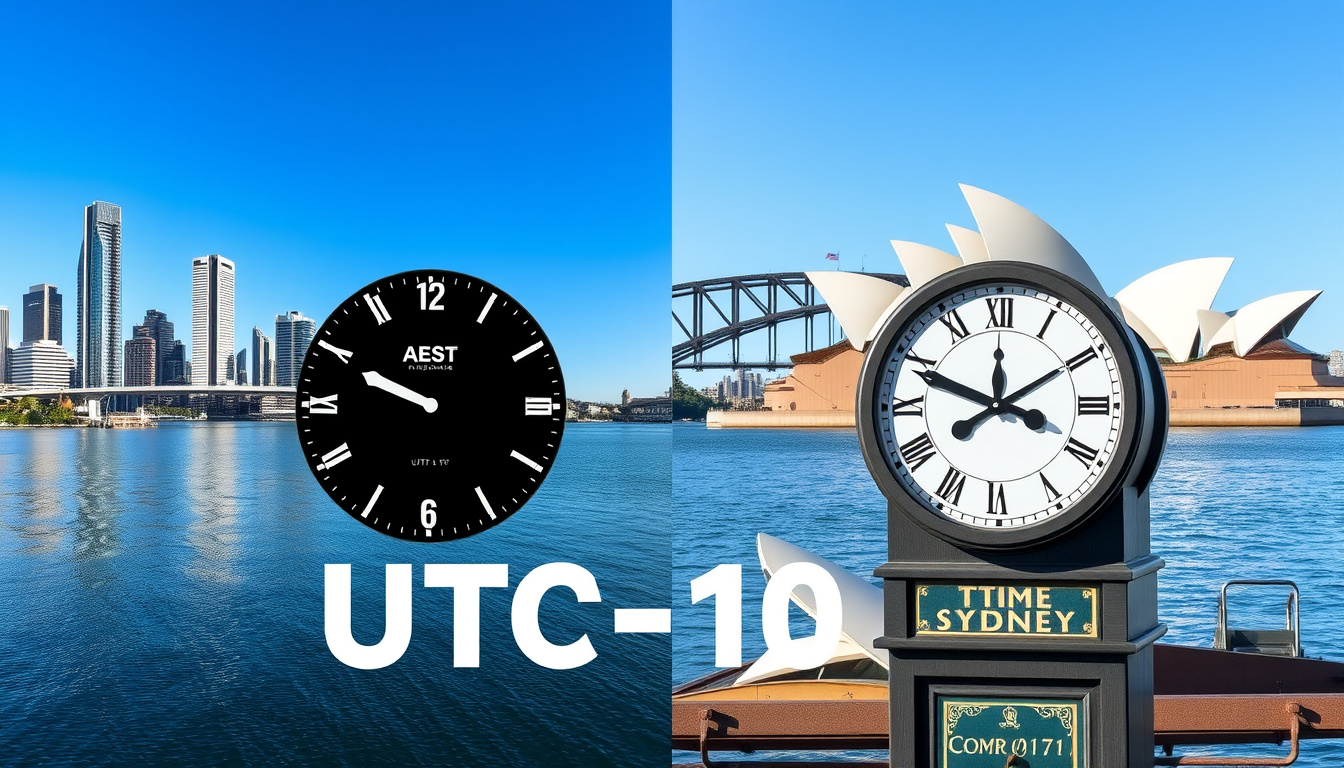

If you’ve ever tried to schedule a call between Brisbane and Sydney, you’ve probably stumbled over the same puzzle: two cities, one coastline, but not quite the same clock. Brisbane runs on Australian Eastern Standard Time (UTC+10) all year round, while Sydney jumps forward an hour during daylight saving. According to time.is (time authority), Queensland dropped daylight saving back in 1992 and never looked back. That split-personality time setup catches a lot of people off guard—and it’s exactly what this guide is here to untangle.
Time Zone: AEST (UTC+10) ·
DST Observed: No ·
Sunrise/Sunset Info: Available via timeanddate.com ·
Time Diff Sydney: Same ·
UTC Offset: +10 hours
Quick snapshot
- Exact current minute requires a live fetch from a time service (timeanddate.com (live clock))
- DST abandoned in 1992 (time.is)
- No adjustments planned through 2026 (24timezones.com)
- Brisbane remains on fixed UTC+10 indefinitely
- No legislative changes pending
Five core facts form the backbone of Brisbane’s time setup, each confirmed across multiple authoritative sources.
| Attribute | Value | Source |
|---|---|---|
| Current Local Time | Dynamic via time.is/Brisbane | time.is |
| Time Zone | AEST | time.is |
| UTC Offset | UTC+10 | Savvy Time |
| DST Status | Not observed | time.is |
| Coordinates | 27.47° S, 153.02° E | time.now |
These specifications establish Brisbane’s time identity as a fixed reference point among Australia’s eastern cities.
What time is it in Brisbane, AM or PM?
The most searched Brisbane time query boils down to one practical question: AM or PM right now? Brisbane sits at UTC+10, placing it firmly in the afternoon for most of Europe and the early morning for the Americas. AEST runs 10 hours ahead of Greenwich Mean Time, so when London clocks noon, Brisbane is already 10 PM the same day. Savvy Time (time converter) confirms this fixed offset applies throughout the year.
Current time display
The most reliable way to check Brisbane time is through a live clock service. time.is (time authority) provides a real-time display with AM/PM indicator, seconds, and sunrise/sunset data. These tools pull from atomic clock servers, making them far more accurate than relying on device settings that might be wrong by a few minutes.
12-hour vs 24-hour format
Brisbane, like the rest of Australia, predominantly uses the 12-hour clock in everyday life—morning, afternoon, evening, and night replace the formal AM/PM structure in casual conversation. Business contexts and international-facing applications typically switch to 24-hour format for clarity.
The practical takeaway: whether you’re seeing 3 PM or 15:00, Brisbane’s clock stays synchronized to UTC+10 regardless of the display format you prefer.
“time.is provides a real-time display with AM/PM indicator, seconds, and sunrise/sunset data. These tools pull from atomic clock servers, making them far more accurate than relying on device settings.”
If you’re calling Brisbane from North America, expect a significant time gap: at 9 AM in New York, Brisbane is already 11 PM the same day. A morning call from the US west coast is simply not happening same-day.
Upsides
- Predictable schedule year-round—no biannual clock shifts
- Easy mental math: always UTC+10, no seasonal adjustments
- Simple conversion from UK/US east coast business hours
Downsides
- One-hour gap with Sydney during DST season
- Limited overlap with European afternoon trading hours
- Confusion for interstate callers unaware of the DST rule
Is Brisbane 1 hour ahead of Sydney?
This is where things get tricky—and where many travelers and business callers get caught. Brisbane and Sydney share the same base timezone code (AEST) during standard time, meaning zero difference from roughly April through October. But when Sydney flips to daylight saving time—typically early October to early April—the gap opens up. Savvy Time (time converter) notes that Sydney then runs on AEDT (UTC+11), putting it exactly 1 hour ahead of Brisbane.
Time zone alignment
The two cities share the AEST label during standard time precisely because Queensland and New South Wales were once on the same schedule. Queensland’s decision to abandon DST in 1992 created this permanent split, even though both states use the same three-letter abbreviation in everyday reference. Greenwich Mean Time (time resource) confirms Brisbane and Sydney share base AEST but diverge during Sydney’s DST window.
Comparison to other Australian cities
- Sydney: AEST (standard) / AEDT (DST) — 0–1 hour ahead depending on season
- Melbourne: AEST (standard) / AEDT (DST) — identical to Sydney’s pattern
- Adelaide: ACST (standard) / ACDT (DST) — 30 minutes ahead of Brisbane year-round
- Perth: AWST (UTC+8) — 2 hours behind Brisbane
- Gold Coast: AEST — same as Brisbane, shares the no-DST rule
“Savvy Time notes that Sydney then runs on AEDT (UTC+11), putting it exactly 1 hour ahead of Brisbane.”
For conference calls between Sydney and Brisbane, Savvy Time recommends 9 AM–6 PM Sydney time (8 AM–5 PM Brisbane) as the optimal overlap window. That window shrinks to 9 AM–5 PM Sydney during DST, when Brisbane falls an hour behind.
What GMT time is it in Brisbane?
Brisbane’s GMT offset is straightforward and never changes: UTC+10. Every single day of the year, regardless of seasons or daylight saving anywhere else on the planet, Brisbane sits exactly 10 hours ahead of Greenwich Mean Time. Savvy Time (time converter) confirms this is a fixed value with no seasonal variance.
UTC offset details
The IANA timezone identifier for Brisbane is Australia/Brisbane, and this code is what operating systems and programming languages use to reference the city’s time rules. Unlike some regions that observe seasonal shifts, Brisbane’s UTC+10 offset is locked in place. time.is (time authority) notes that Brisbane is currently 14 hours ahead of New York, a relationship that holds constant year-round.
Converter tools
The most reliable converters for Brisbane-to-GMT calculations include World Time Buddy (timezone tool) and time.is (time authority). Both allow you to enter any city and instantly see the offset relationship. For developers, the IANA code Australia/Brisbane works directly in most programming environments.
The implication: developers can hardcode Brisbane offsets without seasonal branching logic—a rarity among major time zones.
How many hours is Brisbane in front of England?
Brisbane is consistently 10 hours ahead of the UK—no ifs, ands, or but about it. England operates on GMT (or GMT+1 during British Summer Time), and Brisbane’s UTC+10 offset never shifts. This means whether it’s summer in London or winter, the gap stays locked at 10 hours. World Time Buddy (timezone tool) validates this across its converter database.
GMT/UK comparison
The UK-Australia time relationship is one of the most dramatic in the world. When Londoners are just waking up at 7 AM, Brisbane residents are already finishing dinner at 5 PM. This massive gap severely limits same-day business overlap—UK trading floors close before Brisbane’s day really gets going.
Seasonal notes
British Summer Time (BST) runs from late March to late October, shifting the UK to UTC+1. During those months, the gap between London and Brisbane narrows slightly to 9 hours. But this is a UK shift, not a Brisbane shift—Brisbane stays frozen at UTC+10 regardless. Tourism Australia (official tourism body) documents these timezone rules on its authoritative guide.
What this means: UK-based schedulers must always subtract 9–10 hours to reach Brisbane, never the reverse.
What time zone is Brisbane in?
Brisbane sits in the Australian Eastern Standard Time zone, universally abbreviated as AEST. This same zone encompasses Sydney, Melbourne, Canberra, and the Gold Coast—but here’s the critical distinction: only Queensland (Brisbane) and the Gold Coast refuse to observe daylight saving within that zone. World Time Buddy (timezone tool) verifies that AEST applies to Queensland with no DST adjustment.
AEST details
AEST stands for Australian Eastern Standard Time, the baseline offset of UTC+10 used across Queensland, New South Wales, Victoria, Tasmania, and the Australian Capital Territory. The abbreviation breaks down into three DST-related pairs used across Australia:
- AEST: Australian Eastern Standard Time (UTC+10) — Brisbane’s timezone
- AEDT: Australian Eastern Daylight Time (UTC+11) — Sydney’s summer timezone
- ACST: Australian Central Standard Time (UTC+9:30) — Adelaide, Darwin
- AWST: Australian Western Standard Time (UTC+8) — Perth
No DST since 1992
Queensland conducted a referendum on daylight saving in 1992, and the result was a decisive “no.” Since then, the state has remained on AEST year-round. time.is (time authority) confirms Queensland rejects DST unlike its eastern neighbors. No plans exist to revisit this decision—24timezones.com (timezone service) shows no DST adjustments scheduled for Brisbane in 2026 or beyond.
The pattern: Queensland’s 1992 DST rejection created a permanent fork in Australia’s eastern time zone, with Brisbane now operating independently of its southern neighbors.
Three cities, three distinct DST behaviors—understanding where Brisbane stands relative to its neighbors clarifies why the timezone map of eastern Australia looks more complicated than it should.
| City | Standard Time | DST Time | DST Active? | Relation to Brisbane |
|---|---|---|---|---|
| Brisbane | AEST (UTC+10) | None | Never | Baseline |
| Sydney | AEST (UTC+10) | AEDT (UTC+11) | Oct–Apr | Same in winter, 1h ahead in summer |
| Melbourne | AEST (UTC+10) | AEDT (UTC+11) | Oct–Apr | Same in winter, 1h ahead in summer |
| London | GMT (UTC+0) | BST (UTC+1) | Mar–Oct | 10h behind (9h during UK summer) |
| New York | EST (UTC-5) | EDT (UTC-4) | Mar–Nov | 15h behind (14h during US DST) |
| Perth | AWST (UTC+8) | None | Never | 2h behind year-round |
This comparison table reveals why Brisbane’s fixed clock creates predictable relationships with some cities while introducing seasonal confusion with others.
For anyone coordinating across these cities, the pattern is clear: Brisbane’s clock never moves, while everyone else shifts around it.
Related reading: What time is the Melbourne Cup
Brisbane holds steady at AEST UTC+10 without DST, while the Sydney AEST clock shifts ahead an hour seasonally in line with New South Wales rules.
Frequently asked questions
What is the current time in Brisbane?
Brisbane operates on AEST (UTC+10). For the exact current time, check a live clock service like time.is or timeanddate.com. The time is 10 hours ahead of GMT and does not change seasonally.
Does Brisbane observe daylight saving time?
No. Queensland has not observed daylight saving time since 1992. The state government rejected DST following a community referendum, and there are no current plans to change this policy.
What is the time difference between Brisbane and Melbourne?
During standard time (autumn/winter), Brisbane and Melbourne share the same clock—AEST UTC+10. During Melbourne’s daylight saving period (roughly October to early April), Melbourne runs 1 hour ahead of Brisbane.
How to convert Brisbane time to 24-hour format?
Brisbane already uses 24-hour format for official and international contexts. In everyday Australian usage, the 12-hour clock predominates, but time.is displays both formats. To convert manually: add 12 hours to any PM time (1 PM becomes 13:00, 11 PM becomes 23:00).
What is Brisbane time compared to GMT?
Brisbane is exactly 10 hours ahead of GMT year-round. This is a fixed offset—unlike regions that shift seasonally, Brisbane’s UTC+10 never changes.
Is the time in Brisbane the same as Sydney?
Mostly, but not always. From approximately April through September, both cities are on the same AEST time (zero difference). From October through early April, Sydney shifts to AEDT (UTC+11), putting it 1 hour ahead of Brisbane.
What tools show accurate Brisbane time?
The most reliable tools include time.is, World Time Buddy, and timeanddate.com. All pull from atomic clock servers for accuracy. For developers, the IANA code Australia/Brisbane works in all major programming languages.

Thomas Webb leads fact-checking, source verification and corrections at Aussie Insightly.