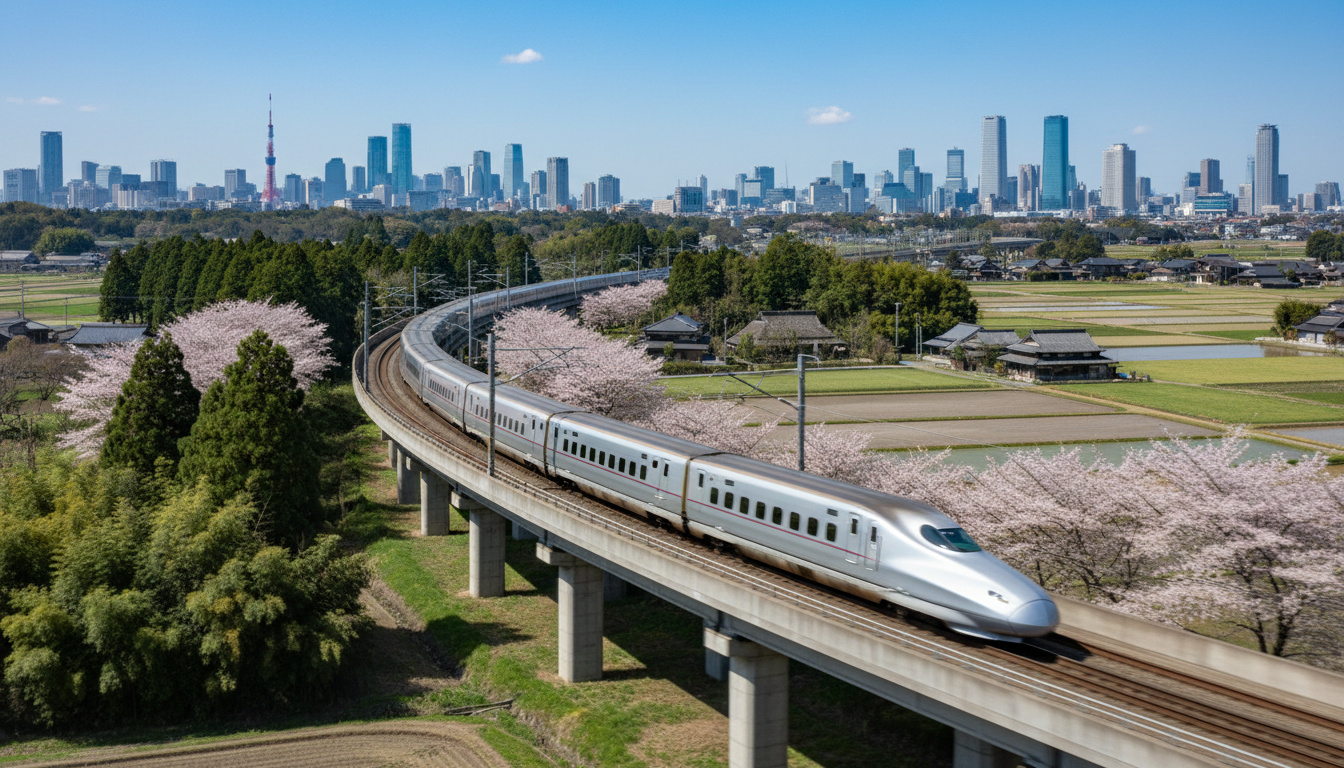

The corridor connecting Tokyo and Osaka constitutes Japan’s most heavily trafficked domestic route, spanning approximately 500 kilometers between the nation’s administrative and commercial capitals. This axis supports diverse transportation modes, each calibrated to specific budgetary constraints and temporal requirements, from the high-velocity Tokaido Shinkansen to economical overnight highway buses.
Selecting the optimal transit method requires evaluation of multiple variables including total journey duration, station accessibility, and ancillary costs such as airport transfers or expressway tolls. While the bullet train dominates market share for its reliability and speed, alternative modalities including aviation, long-distance coach services, and private automobile transport retain distinct competitive advantages for particular traveler profiles.
Comprehensive analysis of current pricing structures, scheduling patterns, and infrastructure developments reveals critical decision factors for 2025-2026 itineraries. The following examination presents verified operational data to facilitate informed route selection.
How to Get from Tokyo to Osaka: Main Travel Options
| Method | Duration | Cost (One-Way) | Comfort | Booking |
|---|---|---|---|---|
| Shinkansen | 2.5-4 hrs | ¥23,000+ | High | JR Stations, JR Central, Apps |
| Flight | 4-5 hrs total | ¥10,000+ | Medium | Airlines, OTAs |
| Highway Bus | 8-10 hrs | ¥3,500-7,500 | Basic | Willer Express, JR Bus |
| Private Car | 6-8 hrs | ¥20,000+ | Variable | Rental agencies |
- The Tokaido Shinkansen operates approximately 150 daily departures with maximum speeds reaching 320 km/h.
- Nozomi service completes the journey in 2 hours 22 minutes, while Hikari requires roughly 3 hours.
- JR Pass holders receive full coverage for Hikari and Kodama trains but must pay supplements for Nozomi.
- Highway buses offer the lowest per-passenger cost, particularly for overnight journeys.
- Domestic flights demand additional transit time to peripheral airports, effectively doubling nominal flight duration.
- Expressway tolls for private vehicles exceed ¥20,000 excluding fuel consumption.
- All rail services terminate at Shin-Osaka Station, requiring local transit to central Osaka destinations.
| Distance | ~515 km |
|---|---|
| Fastest Rail Time | 2h 22m (Nozomi) |
| JR Pass Covered Service | Hikari (~3h), Kodama (~4h) |
| Cheapest Option | Highway Bus (from ¥3,500) |
| Daily Shinkansen Services | ~150 departures |
| Maximum Operating Speed | 320 km/h |
| Primary Departure Points | Tokyo Station, Shinagawa Station |
| Primary Arrival Point | Shin-Osaka Station |
| Air Transit Time | ~1.5 hours (plus airport processing) |
| 7-Day JR Pass Cost | ~¥50,000 |
Travelers considering extended Pacific region journeys might reference the Bridestowe Lavender Farm – Tasmania Visit Guide and Tips for agricultural tourism comparisons.
How Long Does It Take from Tokyo to Osaka?
The geographic separation between Tokyo and Osaka measures approximately 515 kilometers along the Tokaido corridor, though effective travel time varies significantly by modality. Shinkansen services reduce this distance to temporal intervals ranging from 2 hours 22 minutes to 4 hours depending on service classification.
Geographic Distance and Route
Direct linear distance calculates to roughly 400 kilometers, yet transportation infrastructure follows the historic Tokaido route along the Pacific coastline, extending actual travel distance to approximately 515 kilometers. This routing accommodates major intermediate stops including Nagoya and Kyoto while maintaining gradient tolerances suitable for high-speed rail operations.
Shinkansen Service Durations
Three distinct service patterns operate along this corridor. Nozomi trains achieve the fastest times of 2 hours 22 to 25 minutes by stopping only at major stations such as Shinagawa, Nagoya, and Kyoto. Hikari services require approximately 3 hours with 5 to 9 intermediate stops. Kodama trains, serving all stations, complete the journey in roughly 4 hours with 16 stops. Japan Guide provides detailed station-by-station timing specifications.
Flight and Surface Transport Times
Aviation offers airborne segments of approximately 90 minutes between Haneda and Itami or Kansai airports. However, airport security protocols, boarding procedures, and ground transportation extend total door-to-door duration to 4-5 hours. Highway buses operate overnight schedules requiring 8-10 hours, while private vehicles typically consume 6-8 hours depending on traffic conditions and toll route selection.
Shinkansen operations maintain exceptional punctuality standards with average delays measured in seconds rather than minutes. Real-time scheduling data is available through Hyperdia, which aggregates official JR timetables for precise journey planning.
Shinkansen Prices and JR Pass for Tokyo to Osaka
Pricing structures for the Tokaido Shinkansen differentiate between service speeds and seat classifications, creating distinct economic tiers for travelers. The Japan Rail Pass introduces additional complexity regarding coverage limitations and value optimization.
Ticket Pricing Structure
One-way fares for unreserved seats on Hikari and Kodama services cost approximately ¥23,083 as of 2025 data. Nozomi services command slightly higher base fares around ¥23,589 plus supplemental express charges. Reserved seating requires additional fees ranging from ¥1,000 to ¥2,000 depending on season and train classification. JRailPass.com maintains current pricing matrices.
JR Pass Value Calculation
The 7-day ordinary car pass costs approximately ¥50,000 for foreign tourists when purchased before arrival. This pass covers Hikari and Kodama services entirely but excludes Nozomi trains without payment of a ¥4,960 supplemental fee for unreserved seats. Pass holders must activate the voucher at JR exchange offices prior to first use. For itineraries including return trips or additional segments to Kyoto, Hiroshima, or further destinations, the pass typically achieves cost neutrality after two long-distance journeys. 2025 travel guides confirm pricing stability through the current year.
Japan Rail Pass exchange orders must be purchased outside Japan and converted to physical passes at designated JR stations upon arrival. The pass becomes valid for consecutive 7-day periods from the selected start date and covers the Haruka Express connecting Kansai Airport to Osaka Station.
Cheapest Ways: Flights, Buses, and Driving from Tokyo to Osaka
Budget-conscious travelers access significantly reduced fares through low-cost carriers, long-distance bus operators, and ride-sharing arrangements, though each economy option entails trade-offs in temporal efficiency and physical comfort.
Domestic Air Travel Economics
Low-cost carriers operating from Narita or Haneda to Kansai International offer promotional fares beginning at ¥10,000 when booked substantially in advance. Peak travel periods surrounding Expo 2025 may elevate these prices considerably. Ancillary fees for baggage and seat selection often apply, while airport transfer costs to central Osaka add approximately ¥1,000-3,000 to total expenditure.
Highway Bus Services
Willer Express and JR Highway Bus operate overnight services between Shinjuku or Tokyo Station and Osaka Umeda, with fares ranging from ¥3,500 to ¥7,500 depending on seat type and booking window. Reclining seats with electrical outlets provide basic comfort for the 8-10 hour journey. Departure schedules include late-night options arriving in Osaka early morning, effectively conserving accommodation costs.
Private Vehicle Considerations
Automobile travel between metropolitan areas incurs expressway tolls exceeding ¥20,000 plus fuel costs and rental fees if applicable. Travel analyses consistently rank driving as the least economical option for solo travelers, though groups may achieve per-passenger cost parity with rail travel when dividing expenses.
Beyond expressway tolls averaging ¥20,000, drivers must budget for gasoline, potential traffic congestion extending journey times, and urban parking fees in Osaka exceeding ¥1,000 hourly. International driving permits are mandatory for foreign license holders.
What Is the Shinkansen Schedule Tokyo to Osaka?
The Tokaido Shinkansen operates on a high-frequency schedule throughout daylight and evening hours, with service patterns designed to accommodate both commuter and long-distance travelers.
- First Departure: Initial Tokyo Station departures occur at approximately 6:00 AM, reaching Shin-Osaka by 8:30 AM.
- Morning Peak: Between 7:00 AM and 9:00 AM, trains depart every 10-15 minutes, with Nozomi services prioritized.
- Midday Service: Continuous operations maintain 15-20 minute intervals from 10:00 AM through 4:00 PM.
- Evening Rush: Frequency increases to 10-minute intervals beginning 5:00 PM through 8:00 PM.
- Final Departures: Last Nozomi service leaves Tokyo Station near 10:00 PM, arriving Shin-Osaka after midnight.
- Overnight Gap: No scheduled Shinkansen operations between 12:30 AM and 6:00 AM. Video documentation confirms overnight bus alternatives during this window.
What Information Is Fixed vs. Variable for Tokyo-Osaka Travel?
Certain operational parameters remain constant regardless of booking date or carrier selection, while other factors fluctuate based on market conditions and seasonal demand.
| Established Facts | Uncertain/Variable Factors |
|---|---|
|
|
Why Does the Shinkansen Dominate Tokyo-Osaka Travel?
The Tokaido Shinkansen’s market supremacy stems from a confluence of engineering capabilities, urban planning decisions, and economic integration between the Keihanshin and Greater Tokyo metropolitan areas. Since commencing operations in 1964, the line has continuously reduced transit times while increasing capacity through 16-car train sets operating at 3-minute headways during peak periods.
Rail infrastructure connects city centers directly, eliminating the peripheral airport transfers required by aviation. This spatial efficiency provides particular advantages for business travelers requiring same-day return capabilities. The reliability record—averaging less than one minute annual delay per train—further consolidates preference among time-sensitive passengers.
For travelers researching broader Pacific educational opportunities, the Charles Darwin University – Rankings, Campuses, Courses 2025 provides comparative institutional data regarding Australian tertiary options.
What Do Official Sources Say About Tokyo-Osaka Transport?
The 7-day JR Pass costs approximately ¥50,000 and covers Hikari and Kodama services entirely, while Nozomi requires an additional ¥4,960 supplement for unreserved seats. Purchase must occur before entering Japan.
JRailPass.com
The distance between Tokyo and Osaka is approximately 500 km. The best ways to travel are Shinkansen bullet train (fastest and most comfortable at 2.5-4 hours), flights (quickest air option but with airport hassles), or highway buses (cheapest at ¥3,500-¥8,000 for 8-10 hours).
Klook Travel Guide
What Is the Best Way to Travel from Tokyo to Osaka?
The Tokaido Shinkansen offers the optimal balance of velocity, reliability, and urban connectivity for most travelers, particularly when utilizing a JR Pass for multi-city itineraries. Budget constraints favor highway buses despite temporal penalties, while aviation suits specific scheduling requirements where airport proximity aligns with origin and destination points. Private vehicle transport proves economically viable only for group travel with divided costs. Final selection depends on prioritizing temporal efficiency against monetary expenditure, with rail maintaining superiority for center-to-center journeys.
Frequently Asked Questions
How much is the Shinkansen from Tokyo to Osaka?
Unreserved seats on Hikari and Kodama services cost approximately ¥23,083 one-way. Nozomi services cost around ¥23,589 plus supplemental fees. Reserved seating requires additional payment of ¥1,000-2,000.
Is there a bullet train from Tokyo to Osaka?
Yes. The Tokaido Shinkansen operates approximately 150 daily services between Tokyo/Shinagawa and Shin-Osaka stations. Nozomi, Hikari, and Kodama trains serve this route with speeds up to 320 km/h.
How far is Tokyo from Osaka?
The transportation corridor spans approximately 515 kilometers following the Tokaido route, though direct linear distance measures roughly 400 kilometers.
What is the cheapest way from Tokyo to Osaka?
Highway buses offer the lowest cost at ¥3,500-7,500 for one-way travel. Budget flights may compete on price when booked months in advance, typically starting at ¥10,000.
Should I use a JR Pass for Tokyo to Osaka?
Yes, if visiting multiple cities. The 7-day pass (~¥50,000) covers Hikari/Kodama fully. Single Tokyo-Osaka round trips approach pass cost, making additional travel to Kyoto or Hiroshima provide net savings.
How long is the flight from Tokyo to Osaka?
Airborne time is approximately 1.5 hours. Total journey duration extends to 4-5 hours including airport security, boarding, and ground transfers to central Osaka.
Can you drive from Tokyo to Osaka?
Yes. The journey requires 6-8 hours via expressway. However, tolls exceed ¥20,000 plus fuel costs. Traffic congestion frequently extends travel time, particularly during holidays.

Liam O'Brien covers Australian politics and public affairs for Aussie Insightly.