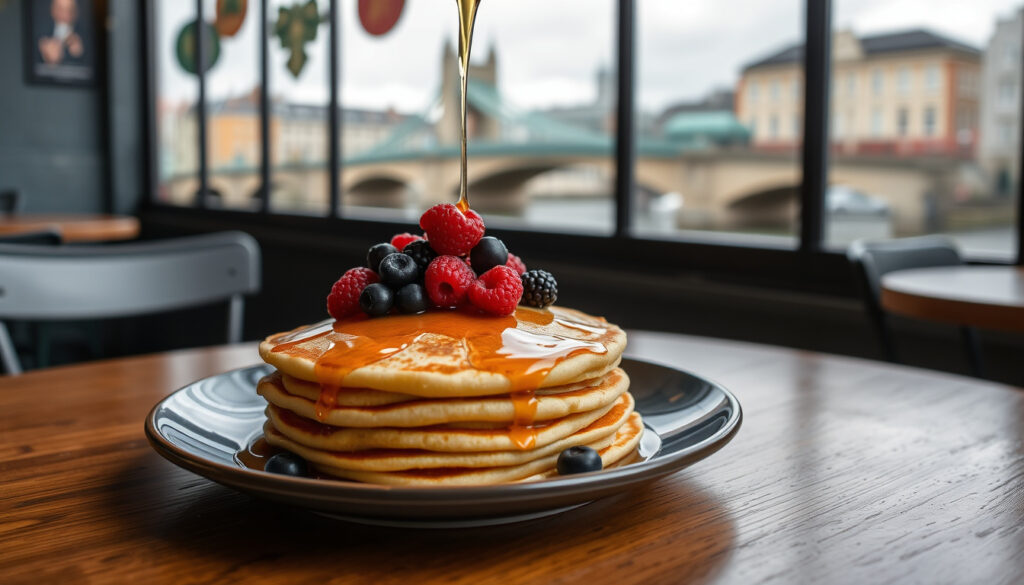
Pancakes Near Me Dublin: Best Spots, Health & Traditions
There’s something about a stack of pancakes that turns an ordinary meal into a small celebration. Whether you’re hunting for the fluffiest American-style stack in Dublin city centre or a thin, perfectly browned Irish pancake on Pancake Tuesday, the search for “pancakes near me” usually leads somewhere good.
Pancake Day 2026 (Shrove Tuesday): February 17 · Average calories in a plain pancake: 86 kcal · Top-rated pancake spots in Dublin (Tripadvisor): 50+ listings · Aldi ready-made pancake pack weight: 350g (10 pancakes)
Quick snapshot
- Pancake Tuesday is a long-established Irish tradition (DublinTown city guide)
- Aldi sells ready-made pancakes in packs of 10 (350g) (DublinTown city guide)
- Restaurant pancakes often use buttermilk and extra butter for texture (DublinTown city guide)
- Whether Muslims should celebrate Pancake Day depends on individual interpretation; Ramadan may overlap
- Exact calorie count varies widely by recipe and toppings
- Medieval Ireland: Shrove Tuesday feasts include pancakes to use up rich ingredients before Lent
- 19th century: Pancake Tuesday becomes a widespread Irish tradition
- 2026 (Pancake Day): February 17 – celebrated across Ireland
- Dublin restaurants will run Pancake Tuesday specials on February 17, 2026
- More Irish cafes are offering healthier pancake variations with oats and wholemeal flour
| Fact | Detail |
|---|---|
| Pancake Day 2026 (Shrove Tuesday) | February 17 |
| Average calories in a plain pancake | 86 kcal |
| Top pancake spots in Dublin (Tripadvisor) | 50+ listings |
| Aldi pancake pack weight | 350g (10 pancakes) |
| Key restaurant pancake ingredient | Buttermilk |
Where can I get really good pancakes?
Dublin’s pancake scene is more varied than many people expect. Tripadvisor’s Dublin pancakes category page lists over 50 restaurants, cafes, and diners serving pancakes across the city, updated as of May 2026. The real challenge isn’t finding pancakes — it’s picking which ones are worth your morning.
Top Dublin pancake spots, mapped by neighbourhood
Five neighbourhoods, five very different pancake experiences. Here’s where locals and visitors actually go:
- City Centre (Grafton Street area): DublinTown’s guide recommends Gino’s, with locations on Grafton Street, Georges Street, and Anglesea Street. Keogh’s Cafe on Trinity Street, family-owned since 1996, is another strong option.
- Dawson Street: Tang offers a healthier pancake choice according to the same DublinTown guide. Beanhive Coffee on Dawson Street also gets a nod from The Irish Road Trip as a solid breakfast stop.
- Stoneybatter: CHAR Magazine names Social Fabric as a destination for indulgent pancakes in this trendy west-side neighbourhood.
- Portobello / South Circular Road: Alma, listed by both CHAR Magazine and The Gloss, serves the kind of Pancake Tuesday stacks that draw queues.
- Drumcondra & Rathmines: The Gloss highlights Le Petit Breton in Drumcondra and Voici Creperie & Wine Bar in Rathmines for their French-leaning pancake and crepe offerings.
What is a pancake restaurant called?
In Ireland, a dedicated pancake restaurant is often called a pancake house, a term used internationally for casual eateries that focus on pancakes and breakfast fare. Some Dublin spots use “creperie” (like Voici) to signal a thinner, French-style pancake, while “cafe” covers the rest. No matter the name, the menu tells the story — look for buttermilk, fresh fruit, and real maple syrup as signs of quality.
Bottom line: Dublin diners have real choice across at least five neighbourhoods, from quick cafe pancakes (Keogh’s, Beanhive) to destination spots (Alma, Social Fabric). For first-timers: start on Dawson Street or Grafton Street, where three of the top-rated spots sit within a ten-minute walk.
Neighbourhood choice affects both queue time and pancake style. City-centre spots (Gino’s, Keogh’s) see the heaviest foot traffic on Pancake Tuesday but offer the widest menu variety. Outer-neighbourhood cafes (Le Petit Breton, Voici) tend to have shorter waits and more traditional recipes.
Are pancakes healthy or no?
The short answer: it depends entirely on what you put in the bowl and on top. A plain pancake made with white flour, milk, and eggs lands at about 86 kcal, with most of its calories coming from carbohydrates. The trouble starts when you add butter, syrup, bacon, and whipped cream — that stack can easily hit 500–700 kcal before you finish chewing.
What is the healthiest pancake to eat?
Health-focused pancake recipes have grown in popularity across Irish kitchens. Several approaches stand out:
- Oat-based pancakes: Blended oats replace white flour, adding fibre and a lower glycemic load
- Wholemeal flour: Swapping plain flour for wholemeal boosts B vitamins and keeps you full longer
- Topping swaps: Fresh berries, Greek yoghurt, and a dusting of cinnamon replace syrup and butter
- Protein pancakes: Adding whey or plant protein powder increases satiety and reduces carb density
Dietitians generally agree that pancakes can fit into a balanced diet — the portion size and topping choices determine whether they’re a reasonable breakfast or a dessert in disguise.
Are pancakes junk food?
Labelling all pancakes as “junk food” misses the nuance. A stack of three plain pancakes (about 258 kcal before toppings) is comparable to a bowl of granola. The problem is that restaurant pancakes — especially American-style stacks — often arrive drenched in butter, drizzled with syrup, and paired with bacon or sausages, pushing the meal past 800 kcal. The meal’s context matters: a pancake breakfast eaten occasionally is not the same as a daily habit.
Irish readers don’t need to give up pancakes. The smarter move is to treat restaurant stacks as an occasional indulgence and keep home-made versions lean — oat flour, fewer toppings, smaller portions.
Bottom line: A plain pancake is not junk food — it’s a simple carb base. For health-conscious Dubliners: choose Tang or a home-made oat pancake over a loaded restaurant stack. Weekend treat-seekers: enjoy Alma’s indulgent version but share the portion.
Is pancake Tuesday an Irish tradition?
Yes — and it’s one of the most widely observed food traditions in the country. Pancake Tuesday, known formally as Shrove Tuesday, falls on the day before Ash Wednesday and marks the last day of indulgence before Lent begins. In Ireland, the tradition goes back centuries: families used up eggs, butter, and milk — ingredients forbidden during Lent — by making pancakes.
What do Irish people call pancakes?
In Ireland, “pancakes” usually refers to thin, crepe-like pancakes made from a simple batter of flour, eggs, and milk. Unlike the thick, fluffy American version, Irish pancakes are cooked thin and often served rolled up with lemon juice and sugar. The difference is significant enough that Irish visitors to the US are sometimes surprised by the dense, cake-like texture of American pancakes.
Are Irish pancakes different from American pancakes?
Yes, and the difference is in the chemistry. Irish pancakes (crepe-style) use a thin batter with no leavening agent, producing a flat, flexible pancake that rolls easily. American pancakes include baking powder or baking soda (plus buttermilk for the acid reaction), which creates bubbles during cooking and results in a thick, fluffy stack. Both are delicious — they’re just different vehicles for toppings.
Are Muslims allowed to celebrate Pancake Day?
This question has become more common as Ireland’s Muslim community grows. There is no single ruling: some Muslim families participate in Pancake Tuesday as a cultural, non-religious food celebration, while others avoid it because of its Christian origins. An additional consideration is that Ramadan sometimes overlaps with the Pancake Tuesday season — in 2026, Ramadan begins in late February, meaning some Muslim families may be fasting on Pancake Day itself. Individual interpretation and family tradition guide the choice.
For Muslim readers in Dublin who want to enjoy pancakes without the religious association, many cafes (Tang, Beanhive) serve pancakes year-round and frame them as a breakfast item, not a Shrove Tuesday event.
Bottom line: Pancake Tuesday is deeply Irish but the tradition is adapting. Younger Irish families — including Muslim households — are reframing it as a food celebration rather than a religious one. The pancake itself stays the same.
Why do restaurant pancakes taste so good?
There’s a reason your home-made pancakes rarely match the ones at your favourite cafe. Restaurants use a handful of techniques that make a disproportionate difference to flavour and texture.
- Buttermilk: The acidity reacts with baking soda to create carbon dioxide bubbles, giving pancakes a lighter, tender crumb. It also adds a subtle tang that balances sweetness.
- Extra butter: Restaurants don’t skimp. A generous amount of melted butter in the batter adds richness and helps the pancakes brown evenly on the griddle.
- Vanilla extract: A small addition that rounds out the flavour profile and makes the pancakes taste “sweeter” without extra sugar.
- Resting the batter: Letting the batter sit for 10–15 minutes before cooking allows the gluten to relax and the starch to hydrate, resulting in more tender pancakes.
- Hot, consistent griddle: Commercial griddles maintain a steady temperature that home stoves struggle to replicate.
None of these tricks are secret — they’re standard kitchen practice. The difference is that restaurants apply them every time, while home cooks often skip steps for speed.
Home cooks can replicate restaurant-quality pancakes by switching to buttermilk, resting the batter for 15 minutes, and using a heavy pan at medium heat. The one thing you can’t easily copy is the commercial griddle — but a cast-iron skillet comes close.
Do Aldi sell ready made pancakes?
Yes. Aldi sells ready-made pancakes in a pack of 10 pancakes (350g), available in the chilled section during the Pancake Tuesday season and often year-round in some stores. They’re a practical option for people who want pancakes without measuring flour on a busy Tuesday morning.
The convenience factor is real: you get 10 pancakes for about the same effort as toasting bread. They work well as a base for both sweet and savoury toppings, though the texture is noticeably thinner and less fluffy than a fresh restaurant pancake. Pair them with fruit, yoghurt, or a drizzle of maple syrup and you have a five-minute meal that beats skipping breakfast entirely.
Dublin pancake spots compared
Six top spots, one contrast: neighbourhood location and pancake style define your experience more than price or rating.
| Restaurant | Neighbourhood | Pancake style | Best for |
|---|---|---|---|
| Gino’s | Grafton St / Georges St / Anglesea St | American-style fluffy | Tourists & city-centre shoppers |
| Keogh’s Cafe | Trinity Street | Cafe-style, family recipe | Quiet breakfast away from crowds |
| Tang | Dawson Street | Healthier, lighter options | Health-conscious diners |
| Alma | Portobello (South Circular Rd) | Indulgent, Pancake Tuesday specials | Special occasion pancakes |
| Social Fabric | Stoneybatter | Creative, generously topped | Trendy brunch with friends |
| Voici Creperie & Wine Bar | Rathmines | French-style crepes | Thin, elegant pancake experience |
Six spots, one pattern: the city’s best pancake options cluster in the south and centre, with no strong representation in north Dublin beyond Stoneybatter. For anyone searching “pancakes near me” in the north suburbs, the realistic best bet is a home-made stack or a trip across the Liffey.
Upsides
- Dublin offers 50+ pancake listings on Tripadvisor alone
- Wide range of styles: American fluffy, Irish thin, French crepe
- Healthier options exist at Tang and with home-made recipes
- Aldi’s ready-made pack makes pancakes accessible on busy days
Downsides
- Restaurant pancakes can hit 500–700 kcal with toppings
- North Dublin is underrepresented for quality pancake spots
- Pancake Tuesday crowds make city-centre spots very busy
- Ready-made Aldi pancakes are thinner and less satisfying than fresh
Confirmed facts vs. what’s still unclear
Confirmed facts
- Pancake Tuesday (Shrove Tuesday) is a long-established Irish tradition (DublinTown)
- Aldi sells ready-made pancakes in packs of 10 (350g) — verified product detail
- Restaurant pancakes often use buttermilk and extra butter for improved texture (CHAR Magazine)
- Irish pancakes are thin and crepe-like, distinct from American fluffy pancakes (The Gloss)
What’s unclear
- Whether Muslims should celebrate Pancake Day depends on individual interpretation; Ramadan may overlap
- Exact calorie count varies widely by recipe and toppings — 86 kcal is a plain baseline, not a guarantee
- Whether Aldi will stock ready-made pancakes year-round or only seasonally
What the experts say
“Pancakes can be part of a healthy diet — it’s the portion size and toppings that make the difference. A stack with berries and yoghurt is a very different meal than one drowned in syrup and butter.”
— Dietitian, cited by The Irish Road Trip (breakfast guide)
“The secret to a great pancake at home is patience. Rest the batter for ten minutes, use buttermilk, and don’t rush the first flip.”
— Contributor, The Gloss (pancake guide)
“Pancake Tuesday in Dublin is one of those rare days when every cafe and restaurant in the city seems to be flipping. It’s a genuine food tradition, not just a marketing event.”
— Editor, DublinTown city guide
For Dubliners searching “pancakes near me” this Pancake Tuesday or any weekend morning, the real divide isn’t between thin and fluffy — it’s between treating yourself and eating well. The city’s best spots (Alma, Social Fabric, Gino’s) deliver the indulgence experience. Health-focused cafes (Tang, Beanhive) and home-made oat pancakes serve the everyday craving. The choice is yours, but the data is clear: a 500 kcal stack once a week is fine; a daily habit is not. For the average Dublin breakfast-goer, the smartest move is to know which neighbourhood delivers the style you actually want — and to skip the queue at Grafton Street on February 17.
For those with a sweet tooth, the city’s best dulce de leche pancakes in Dublin offer a caramel twist on the classic stack.
Frequently asked questions
How many calories are in a pancake with maple syrup?
A plain pancake (86 kcal) plus one tablespoon of maple syrup (52 kcal) totals about 138 kcal per pancake. A stack of three with syrup comes to roughly 414 kcal before any butter or toppings are added.
What is the best flour for fluffy pancakes?
Plain white flour works well, but a mix of plain flour and a small amount of cornflour produces an even lighter texture. For American-style fluffy pancakes, buttermilk and baking powder are more important than the flour type.
Can I make pancakes without eggs?
Yes. Mashed banana, unsweetened applesauce, or a flaxseed-and-water mixture (1 tablespoon flaxseed + 3 tablespoons water) can replace one egg. The texture will be slightly denser but still workable.
Are gluten-free pancakes available at restaurants in Dublin?
Several Dublin cafes offer gluten-free pancake options, including Tang on Dawson Street and some branches of Gino’s. Always confirm with the restaurant on the day, as batter recipes can change.
How long do homemade pancakes stay fresh?
Cooked pancakes keep in the fridge for 2–3 days in an airtight container. Reheat in a toaster or dry frying pan for best texture — microwaving makes them rubbery. They also freeze well for up to 2 months.
What is the difference between Irish pancakes and French crepes?
Very little. Both are thin pancakes made from a similar batter of flour, eggs, and milk. French crepes sometimes use buckwheat flour for savoury versions and are typically larger and thinner. Irish pancakes are slightly thicker but still in the same family.
Can I freeze ready-made Aldi pancakes?
Yes. The 10-pack can be frozen and reheated individually. Place baking paper between each pancake to prevent sticking, and reheat in a toaster or dry pan for 30–60 seconds.
More related posts
 Isaac Butterfield: Biography, Specials, Tour & Controversy
 Spotlight Port Macquarie: Address, Hours, Products & More
 Hyundai i30 Sedan: Reliability, Price & Reviews
 Akshay Kumar: From 14 Flops to Bollywood Icon
 Angel Falls Grill – Perth Location Menu Reviews
 Day Light Saving Victoria: 2026 Dates, Clock Changes & More
 Kmart Australia Facial Recognition Privacy Breach – OAIC Ruling and Timeline
 Ivan Milat: Verified Facts and Unanswered Questions