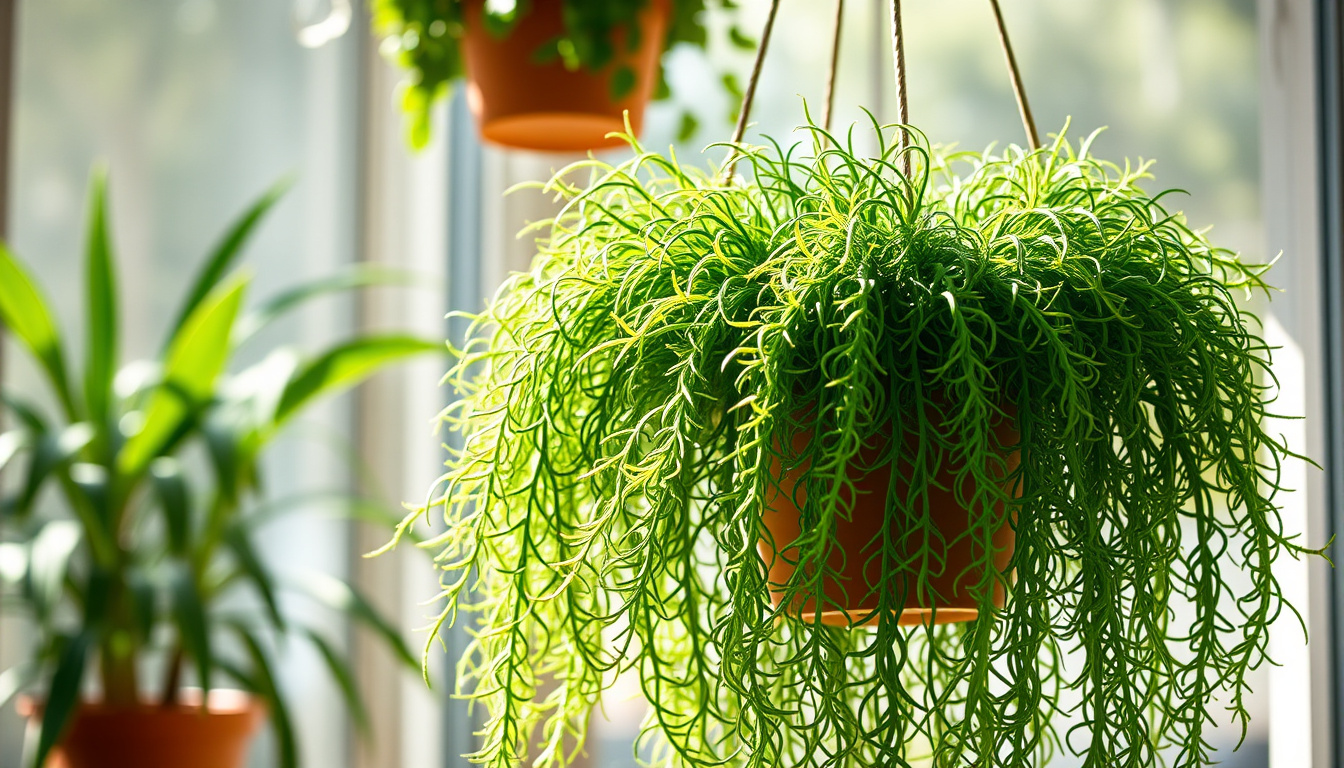

The Cousin It plant drapes Australian gardens in cascading, mop-like foliage that stays short enough to walk on while spreading up to 1.8 metres wide. Developed from cuttings collected near Booderee National Park in 1989, this prostrate she-oak has quietly become one of the hardiest groundcovers you can tuck into a garden bed—handling drought, frost, salt, and poor soil while suppressing weeds and stabilising slopes.
Type: Prostrate groundcover · Native to: Australia · Foliage: Deep green, needle-like · Spread: Up to 6 feet wide · Maintenance: Low
Quick snapshot
- Low maintenance groundcover (Australian National Botanic Gardens)
- Australian native she-oak (Local Botanist)
- Thick litter layer suppresses weeds (Australian National Botanic Gardens)
- Exact growth speed varies by region
- Performance in tropical north Queensland not fully documented
- Cuttings collected near Booderee National Park in 1989
- Establishment documented at Australian National Botanic Gardens, Canberra
- Wide availability through Bunnings and specialist nurseries
- Growing interest in erosion-control applications
Five key dimensions separate this cultivar from the broader Casuarina glauca species.
| Attribute | Verified value | Source |
|---|---|---|
| Scientific name | Casuarina glauca | Local Botanist |
| Height | Prostrate, 0.5m | Local Botanist |
| Width | Up to 2m | Local Botanist |
| Foliage | Cascading, aricular-shaped | Gardening With Angus |
| Hardiness | Coastal adaptable | Gardening With Angus |
| Temperature range | 18–27°C | Local Botanist |
| Cutting length | 10–15 cm | Local Botanist |
| Plant spacing | 3–5 feet | Local Botanist |
| Repot frequency | Every 2 years | Nursery Near Me |
| Artificial light | 12–14 hours | Local Botanist |
How do you care for a Cousin Itt plant?
Cousin It earns its keep by asking very little of you once it’s settled in. It tolerates drought, frost, salt, and poor soil, which makes it unusually forgiving for a native plant in Australian conditions (Gardening With Angus, Australian native plant expert). Still, a few fundamentals keep it looking its cascading best.
Watering needs
Water deeply once a week during active growth, letting the top inch of soil dry between waterings. Reduce frequency in winter. The Australian National Botanic Gardens notes that established plants need minimal watering after initial establishment (Yates Australia, established nursery brand). Deep, infrequent watering builds deeper roots that resist heat stress, while light, frequent watering encourages surface roots prone to drying out (The Danger Garden, gardening blog author).
Sunlight requirements
Full sun to partial shade works best. Morning sun with afternoon shade is ideal, according to Nursery Near Me (specialist nursery guide). Filtered or indirect light prevents scorching while keeping growth compact. If growing indoors without natural indirect sun, artificial light for 12–14 hours per day will substitute (Local Botanist, Australian plant care guide).
Soil preferences
Well-draining soil is non-negotiable. A sandy loam amended with perlite and coarse sand works well, though Cousin It tolerates poor soils and only objects to waterlogging. Plant holes should be slightly deeper and twice the width of the root ball, spaced 3–5 feet apart, with a mulch layer to retain moisture (Local Botanist).
Cousin It looks deceptively fragile with its soft, cascading form, but its root system rewards deep watering over light sprinkle. Australian plants seek water obsessively—if you water them deep, they grow deeper roots and become genuinely drought-proof rather than just drought-tolerant.
Are Cousin It plants fast growing?
Cousin It settles into a steady, spreading pace rather than a sprint. Its prostrate form means it spreads laterally first, filling ground quickly, while staying short enough to function as a walkable or low-maintenance groundcover.
Growth rate
The cultivar shows reliable spreading habit, establishing a dense mat of cascading foliage within a few seasons. While exact growth speed varies by climate and soil, the overall pattern is consistent: moderate lateral expansion with compact height. Regional trials at the Australian National Botanic Gardens demonstrated dense groundcover formation post-1989 establishment (Australian National Botanic Gardens, official botanic gardens research).
Mature size
Cousin It matures to 2–3 feet tall and 4–6 feet wide, according to Local Botanist. The exact width depends on growing conditions—better soil and consistent moisture push it toward the larger end of that range. The deep green, needle-like foliage creates a lush, cascading appearance that reads as a green mop from a distance.
The prostrate form is a cultivar trait, not a response to conditions. If your Cousin It starts reaching upward noticeably, check for insufficient light—a stretched plant signals it’s searching for more sun.
Does Cousin It plant spread?
Spreading is Cousin It’s defining feature. Its cascading growth habit naturally creates a dense, mat-like cover that expands outward rather than upward, making it an exceptionally effective groundcover for specific landscape roles.
Spreading habit
The plant spreads by extending its trailing stems across the soil surface. Each stem roots where it contacts damp soil, gradually thickening the ground layer. This self-layering habit means it colonises available space steadily without aggressive runners or invasive tendencies.
Groundcover use
The thick litter layer Cousin It builds up retains moisture, prevents erosion, and suppresses weeds effectively. The Australian National Botanic Gardens notes that this dense groundcover creates a sanctuary for reptiles and invertebrates in its dense mat, adding ecological value beyond aesthetics (Australian National Botanic Gardens). It’s ideal for spilling over rocks, hillocks, and retaining walls in drought-friendly Australian landscaping (Garden Green AU, Australia-focused gardening resource).
What are the benefits of Cousin It plant?
The benefits extend well beyond aesthetics. Cousin It solves several persistent garden problems simultaneously, which explains its staying power in Australian landscape design.
Erosion control
The dense, cascading foliage intercepts rainfall and slows runoff, while the root system anchors soil in place. For steep embankments and banks that wash out every wet season, Cousin It provides functional slope stabilisation alongside visual appeal. Its tolerance for coastal conditions means it handles salt spray and sandy soils that would stress other groundcovers (Gardening With Angus).
Weed suppression
The thick foliage creates a near-impenetrable mat that shades out weed seedlings before they establish. The dense litter layer from fallen foliage continues suppressing weeds while retaining soil moisture. Gardening With Angus confirms that the dense foliage deters weed growth, adding to the low-maintenance character that makes this cultivar so practical (Gardening With Angus).
For Australian property owners battling erosion on slopes or invasive weeds in garden beds, Cousin It solves two problems with one plant. The trade-off is visual: it looks best in naturalistic or structured landscape settings, not formal bedding arrangements where a compact flowering groundcover would read better.
What are common Cousin It plant problems?
Despite its hardiness, Cousin It communicates distress visibly—mostly through foliage colour and density. Most issues trace back to a handful of common causes that are straightforward to fix once identified.
Pest issues
Cousin It is largely pest and disease resistant. Unlike many garden plants, it doesn’t attract the usual aphid or caterpillar roster that plagues exotic species. The primary “pest” threat is actually environmental stress manifesting as foliage damage rather than insect damage.
Disease fixes
Yellowing leaves signal overwatering, nutrient deficiency, or poor drainage, according to Nursery Near Me. Leafless patches indicate underwatering, requiring regular deep summer watering for best appearance (Flora Grubb’s Guides, growth and tolerance resource). Brown leaf tips or stagnant growth come from inconsistent light or low nutrients—adjust with a slow-release native fertilizer every 4–6 weeks in spring and summer (Nursery Near Me). Heavy frost may brown top foliage, but the plant recovers with new spring growth (Gardening With Angus).
Cousin It’s pest resistance is genuine, but its weakness is water management. Overwatering is the most common killing cause, not underwatering. If in doubt, err toward dryness—the plant bounces back from drought stress far more readily than from root rot.
How to propagate Cousin It plant
Propagation from cuttings is the most reliable method for this cultivar. The process follows standard native plant propagation with a focus on timing and cutting quality.
Take cuttings in early spring using 10–15 cm healthy stems from the current season’s growth. Dip in rooting hormone and plant in a well-draining mix. The Australian National Botanic Gardens notes that cuttings taken from prostrate plants near Booderee National Park in 1989 were successfully established in Canberra’s gardens, demonstrating the cultivar’s amenability to vegetative propagation. Division of mature plants or seeds are alternative methods, though cuttings produce consistent results matching the parent plant’s prostrate form.
The pattern: vegetative propagation reliably duplicates the prostrate trait that makes this cultivar distinct from the parent species.
Buying and availability
Cousin It is widely available through major hardware chains and specialist nurseries across Australia. Bunnings stocks the cultivar in most states, and specialist native plant nurseries offer it year-round. Regional availability varies—Perth gardeners may find more limited stock through specialist nurseries, as the cultivar is more commonly stocked in eastern and southern Australian outlets.
| Consideration | Recommendation | Notes |
|---|---|---|
| Where to buy | Bunnings, specialist native nurseries | Widely stocked in eastern and southern states |
| Perth availability | Specialist nurseries | More limited through major chains |
| Planting season | Spring through early autumn | Avoid mid-winter in cold climates |
| Container vs in-ground | Both suitable | Repot every 2 years in containers |
| Spacing for groundcover | 3–5 feet between plants | Closer spacing for faster fill |
| Soil preparation | Well-draining, sandy loam preferred | Amend clay soils before planting |
Upsides
- Drought-tolerant once established
- Weed-suppressing dense groundcover
- Erosion control on slopes and embankments
- Coastal and frost tolerant
- Low maintenance requirements
- Pest and disease resistant
- Creates habitat for reptiles and invertebrates
Downsides
- Requires well-draining soil—hates waterlogging
- Browns in heavy frost (recovers, but looks untidy)
- Slow to establish from new planting
- Limited formal landscape use—reads best in naturalistic settings
- Can be confused with similar-looking Acacia cognata ‘Cousin Itt’
Comparison: Cousin It vs Acacia cognata ‘Cousin Itt’
Some nurseries and sources confuse Cousin It with Acacia cognata ‘Cousin Itt’, but they are different genera with distinct characteristics.
| Factor | Cousin It (Casuarina glauca) | Acacia cognata ‘Cousin Itt’ |
|---|---|---|
| Family | Casuarinaceae (she-oak) | Fabaceae (wattle) |
| Primary use | Erosion control, groundcover | Ornamental foliage plant |
| Soil tolerance | Wide, coastal adaptable | Well-drained soils |
| Drought tolerance | High | Moderate |
| Growth form | Prostrate, spreading | Weeping, more upright |
| Coastal tolerance | Excellent (salt tolerant) | Moderate |
What this means: both have the cascading, mop-like foliage that gives the “Cousin It” name, but Cousin It (Casuarina) is better suited to functional roles like erosion control, while Acacia reads better as a specimen plant or container feature.
“The dense foliage will deter weed growth, adding to the low maintenance aspect.” — Gardening With Angus, Australian native plant expert
“Aussie plants seek water obsessively. If you water them deep, they grow deeper roots.” — The Danger Garden, gardening blog author
“This whimsical native looks like a green mop draped over garden beds, rocks, or retaining walls.” — Local Botanist, Australian plant care guide
For Australian gardeners, Cousin It occupies a rare niche: a plant that looks distinctive and unusual while doing genuine landscape work. It suppresses weeds, stabilises soil, handles coastal conditions, and asks for almost nothing in return. The trade-off is that it works best in specific settings—slopes, rockeries, retaining walls, and naturalistic plantings—rather than formal garden schemes where its cascading, mop-like form might feel out of place. Property owners with erosion problems or weed pressure on difficult sites should plant it, space it properly, water it deeply for the first season, and let it do its job.
Related reading: Bridestowe Lavender Farm Tasmania · Things to Do in Cairns
Frequently asked questions
Will Cousin It grow in pots?
Cousin It adapts well to container growing. Use a well-draining potting mix and ensure the pot has drainage holes. Repot every 2 years to refresh soil and check roots. Container plants may need more frequent watering than in-ground specimens.
Is October too late to plant?
October falls within the ideal spring planting window for most Australian climates. Spring through early autumn gives the plant time to establish roots before winter dormancy. Avoid planting in mid-winter in cold regions—late spring through summer is safer in frost-prone areas.
How to propagate Cousin It plant?
Take 10–15 cm cuttings from healthy stems in early spring, dip in rooting hormone, and plant in a well-draining mix. Cover with a plastic bag to maintain humidity until roots develop. Division of mature plants or seeds are alternatives, but cuttings produce plants matching the prostrate parent form.
Where to buy Cousin It plant?
Bunnings stocks the cultivar widely in eastern and southern Australian states. Specialist native plant nurseries offer it year-round with more variety in sizes. Perth gardeners should check specialist nurseries rather than major chain stores for broader availability.
Is Cousin It plant suitable for Perth?
Cousin It tolerates the dry, Mediterranean climate of Perth well once established. Its drought tolerance makes it suitable for water-wise gardens in Western Australia. Availability through Perth nurseries may be more limited than eastern states, so check with specialist native plant suppliers.
Can Cousin It plant tolerate drought?
Cousin It is genuinely drought-tolerant once established. Deep, infrequent watering during the first growing season builds the root system needed for drought survival. After establishment, it needs minimal supplemental watering even during dry summers.
Does Cousin It need fertilizer?
Fertilize sparingly with a slow-release native fertilizer every 4–6 weeks during spring and summer. Avoid over-fertilizing—Cousin It’s vigour comes from its adaptability, not from rich soil. Yellowing leaves may indicate nutrient deficiency, but more often signal overwatering or poor drainage.

Thomas Webb leads fact-checking, source verification and corrections at Aussie Insightly.