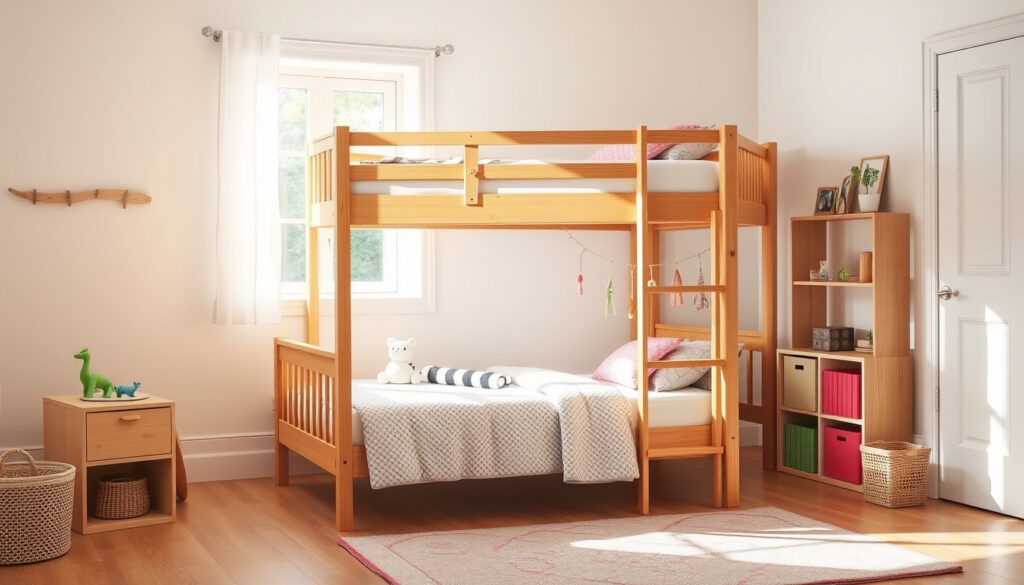
Bunk Beds Age Guide: Safety Tips and Buying in Ireland
If you’re a parent weighing bunk beds for your children’s room, you’ve probably already spotted the biggest question: how young is too young for the top bunk? The answer, backed by safety regulators, is surprisingly consistent—but only if you know where to look.
Annual bunk bed injuries in the U.S.: ~36,000 ER visits (Health Canada) ·
Minimum age recommended for top bunk: 6 years old (Health Canada) ·
Standard guardrail height requirement: 5 inches above mattress (MK Furnishings) ·
Maximum mattress thickness for top bunk: 6 inches (MK Furnishings) ·
Percentage of bunk bed injuries from falls: Over 70% (Health Canada) ·
Typical weight limit per bunk: 200–250 lbs (varies by model)
Quick snapshot
- Top bunk: minimum 6 years old (Health Canada)
- Bottom bunk: from age 2 with adult supervision (ACCC)
- Children under 6 should never sleep on top bunk (Health Canada)
- Guardrails must be at least 5 inches above mattress (MK Furnishings)
- Maximum mattress thickness: 6 inches for top bunk (MK Furnishings)
- Ladder must be stable and placed on firm floor (Health Canada)
- Saves floor space and money (Health Canada)
- Fun for children but requires safety rules (ACCC)
- Potential for falls and injuries if not properly used (Health Canada)
- Des Kelly Interiors – wide range of classic and triple bunks
- OGEL Beds – unique designs
- Bunkbed.ie – extensive selection
- Storage Beds Ireland – storage-integrated options
Here’s how the key safety numbers stack up side by side.
| Fact | Value |
|---|---|
| Minimum age for top bunk | 6 years old (Health Canada) |
| Annual U.S. bunk bed injuries | ~36,000 ER visits (Health Canada) |
| Standard guardrail height | 5 inches above mattress (MK Furnishings) |
| Maximum mattress thickness (top bunk) | 6 inches (MK Furnishings) |
| Typical weight limit per bunk | 200–250 lbs (varies by model) |
| Common injury type | Falls (over 70% of cases) (Health Canada) |
What is an appropriate age for a bunk bed?
The age you choose sets the safety baseline. Regulators from Canada to Australia agree: the top bunk is not a one-size-fits-all piece of furniture.
Can a 2 year old sleep in a bunk bed?
Health Canada, a federal public health agency, advises that children under 6 should never sleep on the top bunk (Health Canada safe sleep guide). A 2-year-old can use the bottom bunk with close adult supervision, but only if the bed is designed with a low height and the child can safely get in and out. The Australian Competition and Consumer Commission (ACCC) goes further, recommending the top bunk for children 9 and older (ACCC bunk bed guide).
Can a 3 year old sleep on a top bunk?
No authoritative source recommends a 3-year-old on the top bunk. Health Canada explicitly states the minimum age is 6. The risk of falls from a height of 4–5 feet is too great for a toddler’s coordination (Health Canada).
Can a 4 year old be on a top bunk?
Again, no. Even the most lenient guidance (U.S. CPSC, per industry standards) sets the floor at 6 years. The ACCC’s more conservative 9-year rule highlights that development matters more than calendar age (ACCC).
Can a 7 year old sleep in a bunk bed?
Yes, a 7-year-old is generally safe on the top bunk, provided they can climb the ladder unassisted and follow safety rules. Health Canada’s guidance says children over 6 can use bunks (Health Canada). But the ACCC notes that maturity and size also matter: a small 7-year-old may still be at risk (ACCC).
The pattern: age 6 is the most common international floor, but Australian regulators push it to 9, reflecting a precautionary approach. For Irish parents, following the 6-year rule is standard, but consider your child’s individual coordination.
What are the disadvantages of bunk beds?
Bunk beds save space, but that saving comes with trade-offs in safety and comfort that many parents underestimate.
Safety risks
- Falls account for over 70% of bunk bed injuries, especially from the top bunk and ladder (Health Canada injury data).
- Entrapment hazards: gaps between guardrails and the bed frame must be less than 3.5 inches, per ASTM standards (MK Furnishings safety guide).
Limited mattress size
Top bunks restrict mattress thickness to typically 6 inches, so that guardrails remain effective. This means a standard 8-inch mattress won’t fit, limiting comfort for adults or older children (MK Furnishings).
Difficulty for children to climb
Ladders can be challenging for toddlers and can cause accidents if not securely attached. Health Canada recommends that only children capable of climbing safely use the top bunk (Health Canada ladder safety).
Limited headroom
Low ceilings can make sitting up in the top bunk impossible, and bumping heads is common. A ceiling height of at least 8 feet is recommended to allow safe upright movement on the top bunk.
The trade-off: space efficiency versus a narrower safety margin. For families with a single toddler, a low bed on the floor may be the smarter choice until the child reaches age 6.
What are the pros and cons of bunk beds?
Space-saving benefits
Bunk beds free up floor space in shared rooms, allowing room for desks, play areas, or storage. Health Canada calls them “a convenient and space-saving option” for children over six (Health Canada).
Cost-effective
A good-quality bunk bed often costs less than two separate single beds. For siblings sharing a room, this can save hundreds of euro.
Fun for kids
Children enjoy the novelty, sleepover potential, and sense of adventure. The ACCC acknowledges that social benefits can outweigh risks if safety rules are followed (ACCC bunk bed guide).
Potential safety concerns
- Falls remain the top injury cause (Health Canada).
- Improper assembly or worn guardrails increase risk.
- Horseplay on the top bunk is a major factor in emergency visits.
Requires careful supervision
Parents must enforce rules: one person on top bunk, no jumping, and safe ladder use. Health Canada says the space under the top bunk is only safe for play if the manufacturer designed it as a play area (Health Canada).
What this means: bunk beds are a practical choice for families with children over 6, but they demand consistent oversight.
Upsides
- Saves floor space, ideal for shared rooms
- More affordable than two single beds
- Children enjoy the experience
- Some models include storage or trundle
Downsides
- Falls from top bunk cause thousands of ER visits yearly
- Restricted mattress thickness may limit comfort
- Ladders can be unsafe for young children
- Requires constant rule enforcement
Are bunk beds safe for children?
Bunk beds are safe when built and used according to standards. The risk is not the bed itself, but the combination of age, behavior, and maintenance.
Top bunk safety guidelines
Health Canada advises that only children aged 6 and older should use the top bunk, and only one person should be on it at a time (Health Canada top bunk rules).
Guardrail requirements
The UK standard (BS EN 747-1:2024) and US standard (ASTM F1427) both require guardrails at least 5 inches (about 13 cm) above the mattress. The gap between the bed frame and guardrail must be less than 3.5 inches to prevent entrapment (MK Furnishings guardrail specs).
Ladder safety
Ladders must be securely attached and placed on a firm, non-slip floor. Health Canada warns that ladder design can cause falls if the child does not hold both sides (Health Canada ladder guidance).
Age and size recommendations
Apart from age, consider your child’s weight and height relative to the bed’s weight limit. Most bunk beds support 200–250 lbs per bed, but some adult-rated models go higher.
Why this matters: a properly maintained bunk bed with adequate guardrails and a stable ladder is a very safe piece of furniture—but only if the child using the top bunk is old enough and mature enough to follow rules.
Where can I buy bunk beds in Ireland?
Several Irish furniture retailers carry a wide selection. While we cannot link to every product page, here are the most common outlets:
- Des Kelly Interiors – classic twin, full, and triple bunk beds with in-store viewing.
- OGEL Beds – focuses on unique, high-quality designs, including wooden and metal frames.
- Bunkbed.ie – an online specialist with a broad range of styles and materials.
- Storage Beds Ireland – offers bunk beds with built-in storage drawers and trundle options.
- MK Furnishings – UK-based but ships to Ireland; provides custom builds for 2–4 children (MK Furnishings).
The implication: Irish shoppers have plenty of local and UK-based options. Always check that the bed meets EU safety standards (EN 747) and includes clear assembly instructions.
Confirmed facts vs. What’s unclear
Confirmed facts
- Health Canada recommends minimum age 6 for the top bunk (Health Canada).
- The ASTM F1427 standard requires guardrails at least 5 inches above the mattress (MK Furnishings).
- Falls account for the majority of bunk bed injuries (Health Canada).
- The ACCC advises top bunks for children 9 and older (ACCC).
What’s unclear
- Exactly when a child can safely use the bottom bunk without supervision varies by individual development.
- Weight limits differ widely between manufacturers; no universal standard exists.
- The long-term effect of bunk bed use on a child’s sleep quality is not well studied.
Expert perspectives on bunk bed safety
“Falls are the most common cause of injuries related to bunk beds and loft beds, especially from the top bunk or ladder.”
— Health Canada, federal public health regulator (Health Canada bunk bed advisory)
“The top bunk or a raised bed is not recommended for children under 9 years old.”
— Australian Competition and Consumer Commission, consumer protection authority (ACCC bunk beds guide)
“Upper-bunk guardrails must rise at least 16 cm above the mattress, and the entry gap should not exceed 30 cm.”
— MK Furnishings, UK retailer citing BS EN 747 and UK 1987 Entrapment Regulations (MK Furnishings safety guide)
The pattern: regulators and retailers converge on guardrail height thresholds, but age recommendations differ by up to 3 years. That gap reflects a real trade-off between safety caution and family convenience.
nateoconcept.com, thebeanbagstore.com, justbunkbeds.com, maxandlily.com
For smaller rooms, single beds with storage offer a practical alternative to bunk beds while still maximising floor space.
Frequently asked questions
Can a 5 year old sleep on the bottom bunk?
Yes, with close adult supervision. The bottom bunk is lower and safer, but the child should be able to get in and out independently. Health Canada does not specify a minimum age for the bottom bunk, but recommends that children under 6 avoid the top bunk entirely (Health Canada bottom bunk guidance).
Do bunk beds fit standard twin mattresses?
Most standard bunk beds use twin (single) mattresses, typically 38 x 75 inches. However, mattress thickness is limited to about 6 inches for the top bunk to keep guardrails effective (MK Furnishings mattress guidance).
How to childproof a bunk bed?
Check that guardrails are at least 5 inches above the mattress, secure the ladder, ensure gaps are less than 3.5 inches, and never allow horseplay. Health Canada advises that the area under the top bunk should only be used for play if designed for it (Health Canada childproofing).
Are bunk beds safe for adults?
Yes, provided the weight limit (typically 200–250 lbs per bed) is observed. Adult use requires a sturdy frame and a sufficient ceiling height. Some models are rated for adult use; always check the manufacturer’s specs.
What is the weight limit for a bunk bed?
Standard bunk beds support 200–250 lbs per sleeping surface, but this varies widely. Always consult the product manual. Commercial or “adult” bunks often support up to 350 lbs (MK Furnishings weight capacity).
Can you separate a bunk bed into two single beds?
Many models are designed to be convertible, but not all. Check the manufacturer’s instructions before purchasing if you anticipate needing two separate beds later.
What is the best material for a bunk bed frame?
Solid wood (pine or hardwood) offers durability and a classic look; metal frames are lighter and often cheaper but may be noisier. Both can be safe if properly assembled and rated for the intended weight.
Editor’s note: The information in this article is based on public safety guidance from Health Canada, the Australian Competition and Consumer Commission, and UK retailer MK Furnishings (which cites BS EN 747 and UK regulations). It is not a substitute for professional safety inspection.
For Irish families, the choice is clear: buy a bunk bed that meets EU safety standards, enforce the age and behavior rules, and you’ll have a space‑saving solution that works safely for years. The alternative—two separate single beds—might cost more and take up more room, but it removes the fall risk entirely.
More related posts
 2024 Kia Sportage – Hybrid Price MPG Trims Guide
 Lamelo Ball Height, Child, Contract & More: Facts vs Fiction
 172 cm in Feet: 5’7.7″ + Height Averages & Guide
 Night at the Museum – Movies in Order, Cast and True Story Guide
 Brazil Serie A: Latest Standings, News & Verified Information
 Things to Do in Cairns – Ultimate 2025 Guide
 Apple CarPlay: Install, Compatibility & Costs Guide
 Public Liability Insurance NSW – Costs Coverage Requirements Guide