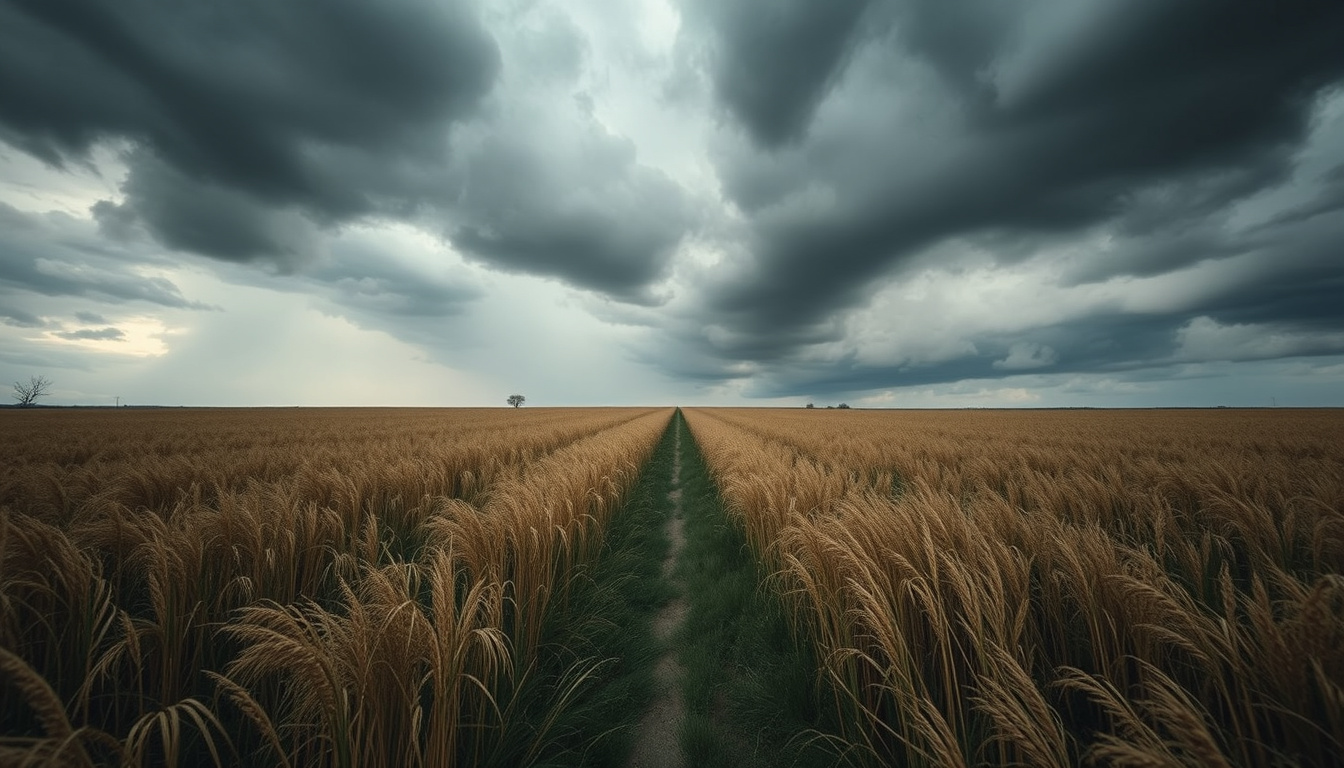
Few horror premises hit harder than a sibling duo driving past a field, hearing a child’s scream, and walking straight into a nightmare they can’t escape. “In the Tall Grass” builds its terror on that very moment — and what unfolds over the next 101 minutes questions how far love pushes people into the inexplicable.
Release Year: 2019 · Genre: Supernatural Horror · Based On: Stephen King and Joe Hill Novella · Streaming Platform: Netflix · Plot Core: Brother and sister trapped in field
Quick snapshot
- 2019 Netflix release directed by Vincenzo Natali (Wikipedia)
- Based on Stephen King and Joe Hill’s 2012 novella (Wikipedia)
- Core plot centers on siblings trapped in a field in Oklahoma (Screen Rant)
- Exact scare intensity varies by viewer
- Whether sequel plans exist remains unconfirmed
- Specific book-to-movie fidelity details
- Viewers weigh whether the 101-minute runtime delivers
- Stephen King fans debate adaptation quality
- Streaming availability varies by region (unverified)
- Mixed critical response noted across reviews
- Horror fans show niche appeal
- Critical reception remains divided (unverified)
Five essential details define this Stephen King field nightmare.
| Attribute | Value |
|---|---|
| Director | Vincenzo Natali |
| Writers | Stephen King, Joe Hill |
| Runtime | 101 minutes |
| Language | English |
| Country | Canada |
What actually happened in the movie “In the Tall Grass”?
When Becky and Cal DeMuth pull over on a rural Oklahoma road, they hear a boy’s voice calling from inside a vast field of tall grass. They separate to find the source — and that’s when the nightmare begins. According to Screen Rant’s analysis, the grass distorts direction, sound, and time itself, trapping anyone who enters in an endless loop. The siblings find themselves unable to reunite, their voices pulling them apart no matter how close they get.
The setup in the field
The film’s opening presents an ordinary scenario that quickly turns sinister. Becky and Cal encounter Tobin, a boy trapped in the grass who claims a man with a knife is chasing him. The siblings split up to help, but the grass itself seems to fight against their attempts to find each other. Wikipedia notes that Becky is pregnant and traveling with her brother to San Diego, adding urgency to their situation — they have somewhere to be, but the field won’t release them.
Time loop revelations
The film’s central horror mechanic reveals itself gradually. Characters who touch a black rock inside the field gain knowledge of how to escape but lose all desire to leave, according to Screen Rant’s detailed breakdown. This creates a trap where understanding the way out becomes the very thing that prevents escape. The grass manipulates both space and time, trapping victims in repeating patterns where they age, die, and return to repeat the cycle.
The final confrontation
Travis, Becky’s ex-boyfriend who enters the grass after spotting her car nearby, eventually touches the black rock. However, WatchMojo’s ending analysis explains that he manages to cling to his own identity even as the grass tries to consume him. This resistance allows him to break the cycle. Becky dies from the trauma of her miscarriage during the film’s events, but the loop’s breaking means her unborn child survives. The film’s ending serves as a beginning — Tobin exits the church to find time has reset to before Becky and Cal entered the grass, allowing him to warn them away.
What is the plot behind In the Tall Grass?
The story adapts Stephen King’s 2012 novella, co-written with his son Joe Hill, and transplant the horror to a vast Oklahoma field. The narrative follows multiple characters whose fates interlock through the grass’s time manipulation. Ross Humboldt, a man who enters the field with his wife Natalie, becomes a secondary antagonist — Screen Rant reports that Travis ultimately kills Ross by strangling him with bundles of grass. The film’s supernatural elements stem from the grass itself — an entity that feeds on human suffering and uses spatial and temporal distortion as its hunting mechanism.
Initial entry
The story begins innocuously enough. A pregnant woman and her brother stop their car after hearing a child’s cry. The source appears close — just inside the tree line at the field’s edge — but distance becomes meaningless once inside. According to Wikipedia’s entry on the film, this setup mirrors the novella’s structure, where ordinary decisions lead to extraordinary horror.
Discoveries inside
Characters encounter several supernatural phenomena: the grass seems to move against the wind, sound travels in impossible directions, and time flows differently. Those who have been inside longest show signs of psychological deterioration — they speak in fragmented sentences, their sense of self eroding as the grass consumes them. The black rock at the field’s center represents both salvation and damnation: it offers understanding but removes the will to act on that knowledge.
Supernatural elements
The entity within the grass operates on rules that victims slowly discover. Touching the rock grants knowledge but removes desire. Separating from loved ones creates vulnerability. The grass itself appears almost alive — YouTube analysis of the ending suggests the field functions as a predatory organism that uses human emotions against them, exploiting the instinct to help others as a mechanism for drawing prey deeper.
Is In the Tall Grass worth watching?
The answer depends heavily on what viewers seek from their horror experience. For dedicated fans of supernatural thrillers, particularly those who appreciate Stephen King’s work, the film offers atmospheric dread and an intriguing central mystery. For casual viewers seeking straightforward scares, the film’s more abstract elements may frustrate.
Strengths
- Strong central concept rooted in human psychology rather than cheap jump scares
- Atmospheric cinematography that makes the field feel genuinely threatening
- Effective use of sound design — the grass rustling, voices echoing from impossible directions
- Strong performances from the cast in conveying desperation and confusion
Weaknesses
- The time-loop mechanics require viewer patience and attention to follow
- Some plot threads feel underdeveloped — supporting characters disappear without resolution
- The ending, while clever, may leave mainstream audiences wanting more explicit resolution
Audience fit
If you appreciate horror that rewards re-watching and analysis — like “Triangle,” “Coherence,” or “The Others” — you’ll likely find value here. If you prefer your horror with clear explanations and unambiguous endings, this adaptation may disappoint. The film sits firmly in the psychological horror camp rather than the slasher or gore categories.
The trade-off: you exchange immediate gratification for a layered narrative that reveals more on second viewing.
How scary is In the Tall Grass movie?
The film leans heavily on atmospheric dread rather than graphic violence, though it contains content that some viewers may find disturbing. The scares come from disorientation — characters lost in a field that seems to shift around them — and psychological horror, as the grass exploits their emotional vulnerabilities.
Scare types
- Environmental dread: the field itself becomes a character, always present, always threatening
- Sound-based scares: voices from impossible distances, grass moving without wind
- Psychological horror: the time loop’s effect on identity and sanity
- Limited jump scares: more tension-building than sudden frights
Disturbing elements
Reviewers note several sequences that push beyond standard horror boundaries. Common Sense Media’s assessment highlights themes of self-harm, psychological manipulation, and familial trauma as prominent throughout the narrative. The film’s exploration of sibling dynamics under extreme duress contains undertones — specifically regarding Cal’s character — that some viewers find uncomfortable rather than merely frightening.
Kid suitability
Common Sense Media rates the film for mature audiences, citing horror elements, language, and thematic content. Parents should know the film contains scenes depicting miscarriage, psychological deterioration, and violence. The grass itself functions as a predator, which may disturb younger viewers accustomed to more fantastical horror.
The upshot: this is not a gateway horror film. It demands viewer tolerance for psychological unease over visceral shocks.
Was Cal in love with his sister In the Tall Grass?
The film’s most controversial element involves the relationship between Cal and Becky DeMuth. The Stephen King Wiki documents that Cal exhibits possessive and protective behaviors toward his sister that extend beyond typical sibling dynamics. The novella’s source material includes moments where Cal’s attention on Becky reads as infatuation rather than fraternal concern.
Cal DeMuth backstory
The film establishes that Cal is accompanying Becky on a trip to San Diego where she plans to give up her baby for adoption. Cal appears opposed to this decision, though his motivations remain somewhat ambiguous throughout. Screen Rant notes that his insistence on accompanying her and his resistance to her adoption plan could stem from sibling concern — or from something more complicated.
Relationship dynamics
The time loop’s effects compound these dynamics. As characters experience repeated cycles, their psychological states deteriorate. Cal’s behavior becomes increasingly erratic and possessive as the film progresses, though the narrative leaves room for interpretation regarding whether his actions stem from protective instinct or emotional obsession. The film’s final act introduces Travis, Becky’s ex-boyfriend, which complicates Cal’s role — he represents both a barrier to Travis’s involvement and a potential threat to the sibling’s bond.
Implications
Whether intentional or incidental, the film’s treatment of Cal and Becky’s relationship adds another layer of unease to an already uncomfortable viewing experience. Stephen King’s source material deliberately cultivates this discomfort — the field’s exploitation of emotional vulnerability extends to potentially unhealthy attachment. Viewers should approach these elements with awareness that they may be intentional uncomfortable choices rather than oversight.
Upsides
- Intriguing time-loop concept that rewards rewatching
- Strong atmosphere and sound design create genuine unease
- Stephen King source material provides literary credibility
- Novel resolution breaks genre conventions
Downsides
- Confusing narrative structure may alienate mainstream viewers
- Some underdeveloped subplots leave questions unanswered
- Disturbing themes limit audience appeal
- Requires patience to appreciate the full concept
What people say
“The film’s concept is genuinely compelling — a field that warps time and space, trapping those who enter. Where it loses its way is in execution, piling supernatural concepts without fully exploring any single one.”
“Common Sense Media’s content review flags this as appropriate for teens and up, but parents should know the film deals with mature themes including self-harm ideation, psychological manipulation, and family trauma — it’s not the kind of horror that washes off easily.”
“Vincenzo Natali directs with a preference for visual atmosphere over narrative clarity, which works for fans of his previous work but may frustrate viewers expecting the straightforward adaptation King’s novella might suggest.”
— Screen Rant
The film’s Rotten Tomatoes critical score sits in mixed territory — critics and audiences disagree sharply, suggesting the viewing experience depends almost entirely on individual expectations and tolerance for ambiguous horror.
For viewers weighing whether to spend 101 minutes in the field, the calculation is straightforward: if you want horror that respects your intelligence and rewards attention, the Netflix adaptation delivers. If you need clear answers and protagonist resolution, look elsewhere. The film commits to its supernatural rules with unusual confidence, even when those rules resist easy explanation.
Related reading: Come and See: Where to Watch, Plot, and Horror Explained · The Devil All the Time: Plot, Cast, True Story & Reviews
Vincenzo Natali’s disorienting Netflix take on the Stephen King and Joe Hill novella traps siblings in a time-warping maze, unpacked further in plot and origins breakdown amid its redemptive horrors.
Frequently asked questions
Who directed In the Tall Grass?
The film was written and directed by Vincenzo Natali, a Canadian filmmaker known for his work in the science fiction and horror genres, including the cult classic “Cube.”
Is In the Tall Grass based on a book?
Yes. The film adapts a novella co-written by Stephen King and his son Joe Hill, originally published in 2012’s “Heads Will Roll” anthology.
Where can I watch In the Tall Grass?
The film is available exclusively on Netflix as a streaming original. No additional purchase or rental is required beyond a standard Netflix subscription.
Does In the Tall Grass have a sequel?
No sequel has been announced as of this writing. The ending provides resolution to the main narrative, though Stephen King’s source material could theoretically support additional stories.
What is the In the Tall Grass trailer like?
The trailer emphasizes the film’s atmospheric dread and family drama, showcasing the field’s threatening presence and the siblings’ escalating desperation. It avoids heavy spoiling while conveying tone.
Is In the Tall Grass on IMDb?
Yes. The film maintains an IMDb page with cast information, user ratings, and critical reviews. User scores tend to be more favorable than professional critic scores.
Who are the main cast in In the Tall Grass?
The film stars Laysla De Oliveria as Becky and Avery Whitted as Cal, with Patrick Wilson playing Travis and Harrison Gilmer as Tobin. The ensemble also includes across other cast members supporting the central narrative.
Is In the Tall Grass related to Stephen Hillenburg or other Stephen works?
No. The film’s connection to Stephen King is direct — he co-wrote the source novella with Joe Hill. The similar name to Stephen Hillenburg (creator of SpongeBob) is coincidental.

Thomas Webb leads fact-checking, source verification and corrections at Aussie Insightly.